
By Priya Chandrasekar, Project Director - Saamuhika Shakti; Anusuya Ravikumar - Project Lead, Saamuhika Shakti, and Shruti Anand - Specialist, Marketing & Communication, Udhyam Vyapaar, Udhyam Learning Foundation
As part of the Saamuhika Shakti collective, Udhyam Learning Foundation (ULF) has been working with waste pickers who have transitioned into nano-entrepreneurs, with a dual focus: strengthening entrepreneurial mindsets and enabling the sustained growth of their enterprises.
In the previous Quarterly, we reflected on the insights shared by these entrepreneurs on the ground realities and structural constraints of building livelihoods within marginalised communities.
This is the second part of that series. Here, we outline how these insights have informed our approach — translating into context-responsive interventions and solutions designed from the ground up.
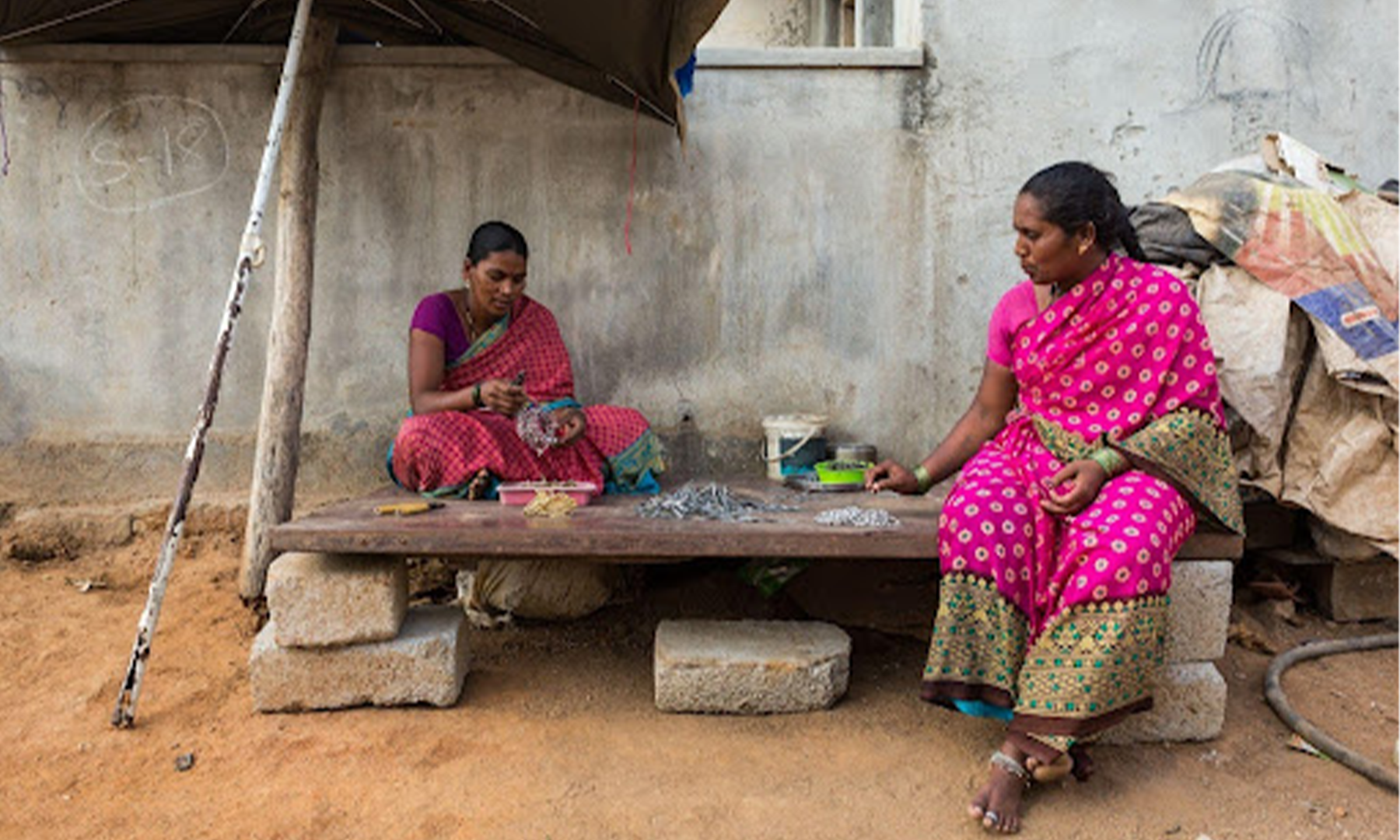
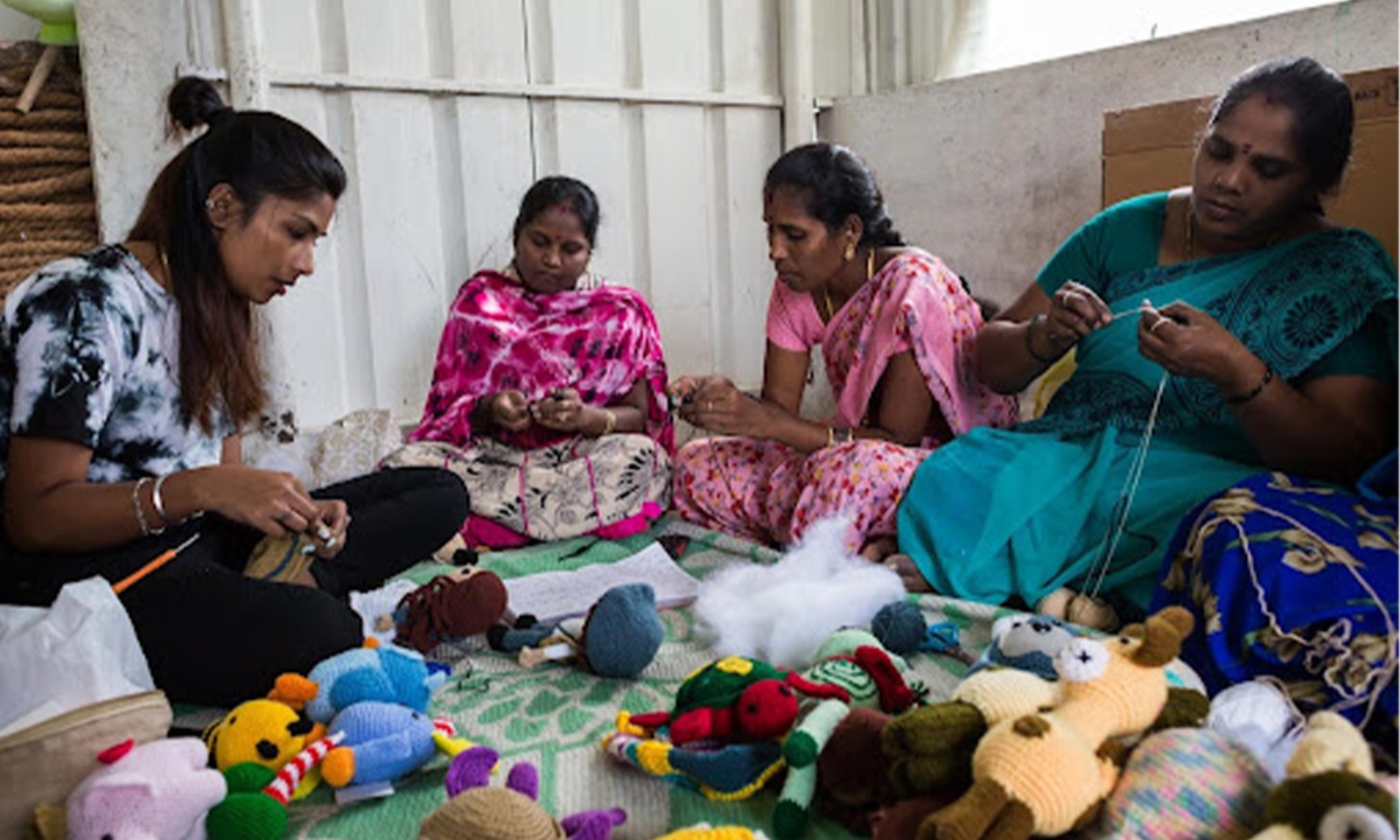
Through this journey, ULF engaged with close to 175 entrepreneurs across 15+ diverse business segments — including fruit and vegetable vending, cloth retail, crochet, food services, metal craft, balloon vending, candle making, wire basket weaving, garland making, and kirana stores, among others.
As of today, ULF has enabled over 120 nano-entrepreneurs to generate meaningful additional income. From a baseline of ₹4,600 per month, entrepreneurs are now earning an additional ₹4,000 on average — representing an 85% increase in income. Cumulatively, this translates to INR 30 lakhs in incremental income generated thus far.
Alongside these economic outcomes, the team also identified a cohort of emerging role models — predominantly women — who have not only achieved income growth but have also demonstrated significant shifts in mindset, self-efficacy, and aspiration through sustained engagement with their enterprises.
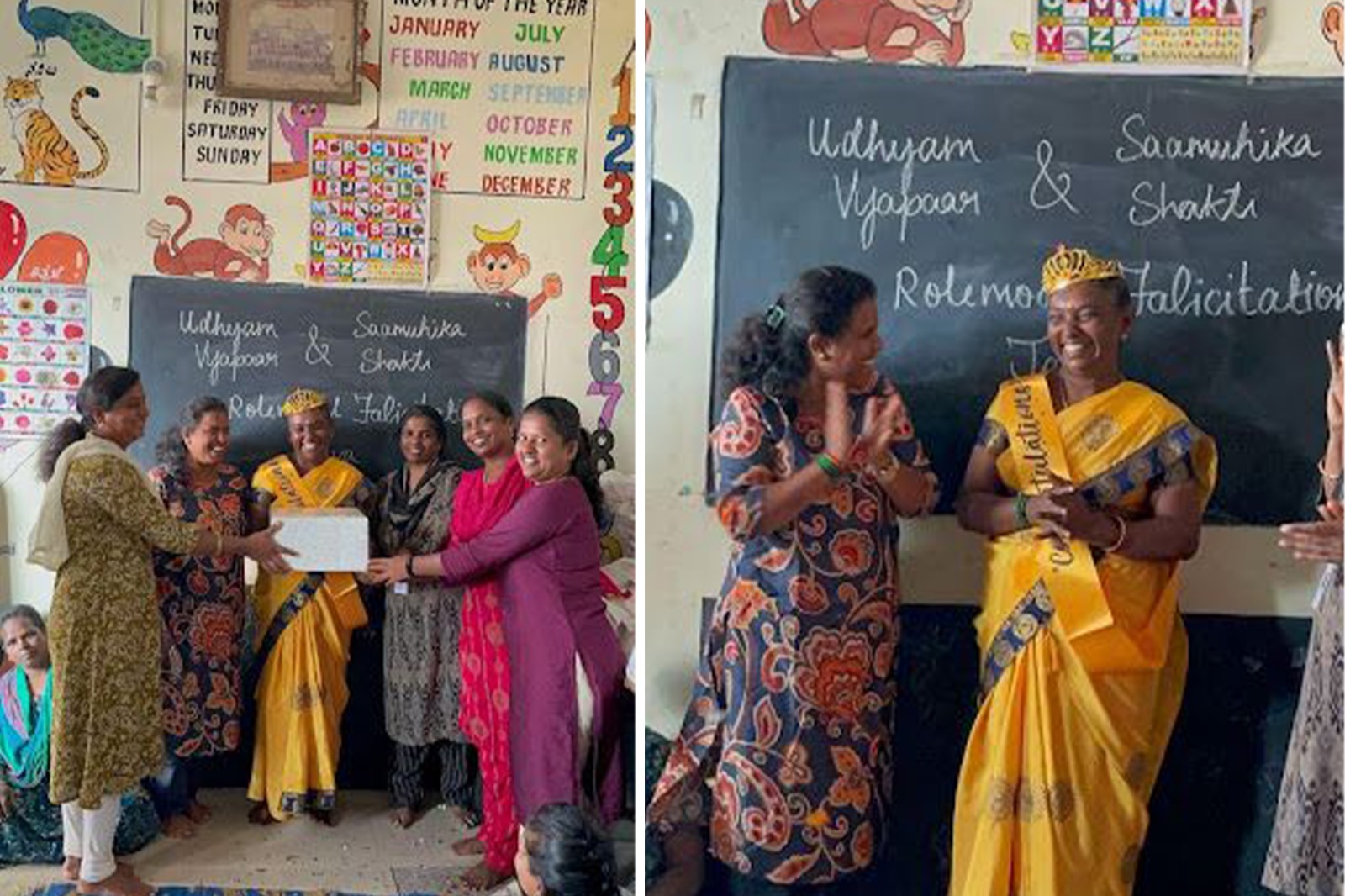
Jeeva, a food street vendor, was recently felicitated as one such emerging role model. Through her journey, she has not only strengthened her business and improved her earnings by 10x, but also demonstrated a visible shift in confidence. Her hard work has now enabled her to set up a second stall, marking a significant milestone in her journey. With this expansion, she is also creating employment opportunities for others, a moment of immense pride.
You can read more about Jeeva’s journey and you can take a glimpse of her felicitation celebration.
Once the Vyapaaris were onboarded, our priority was to establish a robust baseline — capturing the nature of each enterprise, its operating model, and its financial dynamics. This process proved considerably more complex than anticipated.
The livelihoods of nano-entrepreneurs are inherently fluid: individuals frequently shift between income streams, operational patterns are irregular, and seasonality exerts a strong influence on earnings. The near absence of formal financial records meant that data collection relied heavily on self-reporting, necessitating careful mitigation of cognitive biases such as the recency effect, where recent experiences disproportionately shape recall.
Meaningful insights emerged not through one-time assessments, but through sustained, trust-based engagement. As relationships deepened, entrepreneurs began to share more candidly — revealing both the visible and less visible dimensions of their economic lives. Over time, this informed the development of business-archetype-specific diagnostic tools, ensuring a more comprehensive and reliable mapping of revenues, costs, and constraints.
A core principle underpinning the intervention was to anchor all solutioning in the lived realities of entrepreneurs. The starting point was always the voice of the entrepreneur. Through iterative conversations, we developed a nuanced understanding of each individual’s business trajectory, prior attempts at growth, competitive landscape, and the socio-cultural constraints shaping their choices.
At the centre of this process was a simple but generative question: “What do you need to grow your business?”
These qualitative insights were complemented by structured neighbourhood scans — mapping local demand patterns, competition, and market gaps — alongside broader market assessments to identify sourcing opportunities and emerging trends. Growth pathways were then co-created, with entrepreneursretaining decision-making agency in selecting and implementing strategies aligned with their context.

While access to capital remains an important enabler, the constraints faced by nano-entrepreneurs are multi-dimensional. Accordingly, interventions were designed across several domains:

These efforts were delivered through a combination of one-on-one mentoring, hands-on support, and a deliberate focus on building their entrepreneurial mindsets and agency.
A distinguishing feature of the approach was the emphasis on mindset transformation alongside business support.
For many participants, their economic activity had not previously been framed as an “enterprise.” Reframing identity — from worker to nano-entrepreneur — and building a sense of dignity and ownership over one’s work was a critical first step.
The intervention also sought to surface and build upon the resilience that individuals had already demonstrated in navigating personal and economic adversity. Business strategies were intentionally simplified into actionable steps, and iterative experimentation was encouraged. Early successes played an important role in reinforcing confidence, while peer learning helped normalise the possibility of growth.
To address constraints around risk-taking, idea trial funds were introduced as a form of “failure capital” — enabling entrepreneurs to test new ideas without jeopardising their limited resources. These funds supported a range of use cases, including restarting businesses, product diversification, acquisition of basic equipment, and co-investment in small capital assets.
Sustained engagement focused on strengthening behavioural foundations — particularly regularity and financial discipline i.e. good business habits.
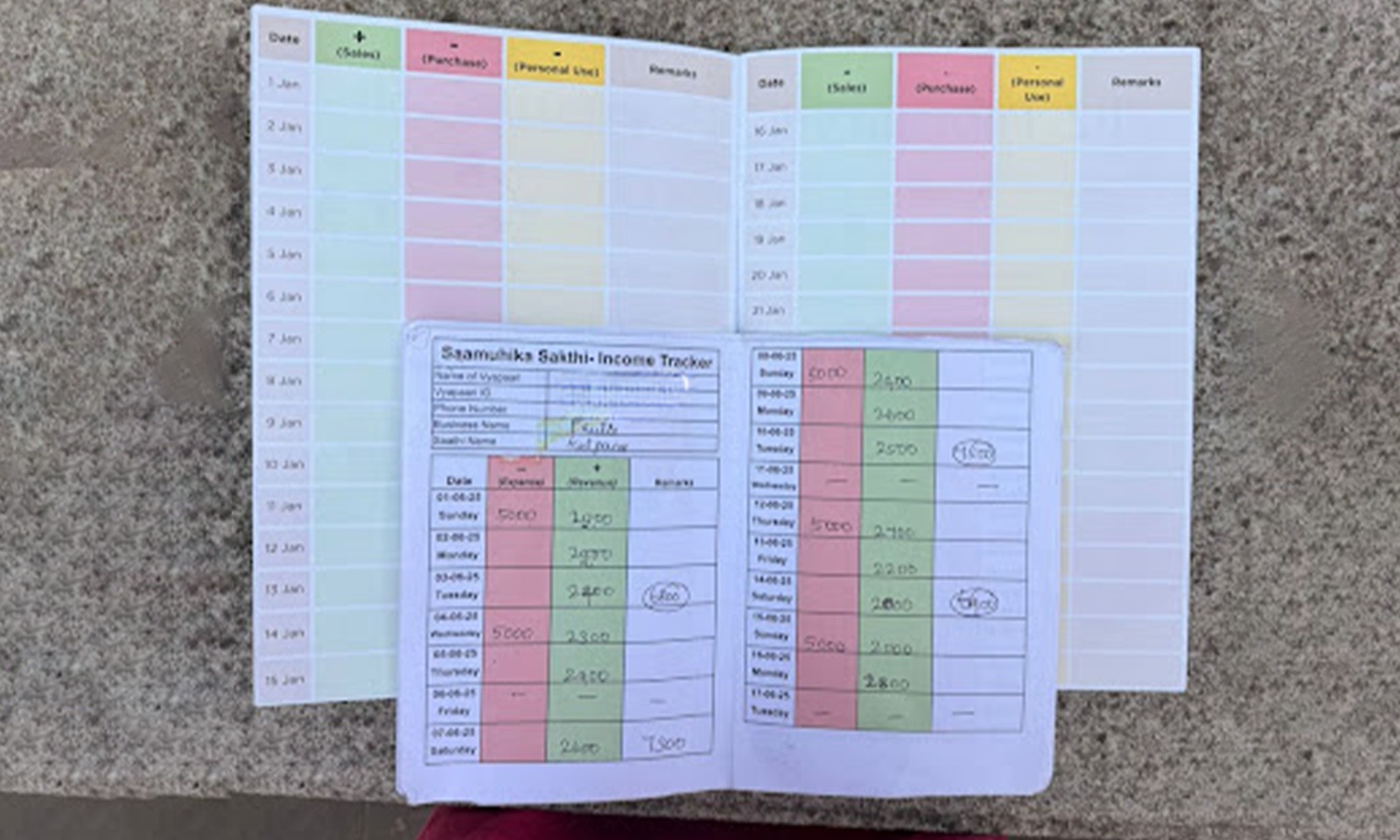
Through consistent follow-ups, there were notable improvements in business continuity and effort. A simple but effective intervention — daily tracking of income and expenses using an A4 Income Tracking Sheet — has now been adopted by approximately 65% of the cohort. While modest in appearance, this represents a meaningful shift in financial awareness and decision-making.
To institutionalise this practice, an annual Income Tracker Booklet has been developed and disseminated.
These videos capture moments from the launch and explore why these tools matter to our nano-entrepreneurs. Watch here and here.
Eighteen months into the intervention, a strong foundation has been established. Income gains have initiated a reinforcing cycle: increased earnings are driving higher engagement, consistency, and commitment — which, in turn, are contributing to further growth.
Encouragingly, shifts are also evident at the level of mindset and behaviour. As early adopters begin to experience tangible outcomes, they are emerging as role models within their communities — catalysing broader participation and aspiration.
The next phase will focus on deepening and scaling this momentum — enabling a larger cohort of nano-entrepreneurs to build stable, upwardly mobile livelihoods. With continued collaboration, sustained engagement, and a commitment to context-responsive problem-solving, Udhyam believes that durable, dignified change within Bengaluru’s waste picker communities is not only possible, but already in motion — albeit in its early stages.
By Priya Chandrasekar, Project Director - Saamuhika Shakti; Anusuya Ravikumar - Project Lead, Saamuhika Shakti, and Shruti Anand - Specialist, Marketing & Communication, Udhyam Vyapaar, Udhyam Learning Foundation
As part of the Saamuhika Shakti collective, Udhyam Learning Foundation (ULF) has been working with waste pickers who have transitioned into nano-entrepreneurs, with a dual focus: strengthening entrepreneurial mindsets and enabling the sustained growth of their enterprises.
In the previous Quarterly, we reflected on the insights shared by these entrepreneurs on the ground realities and structural constraints of building livelihoods within marginalised communities.
This is the second part of that series. Here, we outline how these insights have informed our approach — translating into context-responsive interventions and solutions designed from the ground up.
Through this journey, ULF engaged with close to 175 entrepreneurs across 15+ diverse business segments — including fruit and vegetable vending, cloth retail, crochet, food services, metal craft, balloon vending, candle making, wire basket weaving, garland making, and kirana stores, among others.
As of today, ULF has enabled over 120 nano-entrepreneurs to generate meaningful additional income. From a baseline of ₹4,600 per month, entrepreneurs are now earning an additional ₹4,000 on average — representing an 85% increase in income. Cumulatively, this translates to INR 30 lakhs in incremental income generated thus far.
Alongside these economic outcomes, the team also identified a cohort of emerging role models — predominantly women — who have not only achieved income growth but have also demonstrated significant shifts in mindset, self-efficacy, and aspiration through sustained engagement with their enterprises.
Jeeva, a food street vendor, was recently felicitated as one such emerging role model. Through her journey, she has not only strengthened her business and improved her earnings by 10x, but also demonstrated a visible shift in confidence. Her hard work has now enabled her to set up a second stall, marking a significant milestone in her journey. With this expansion, she is also creating employment opportunities for others, a moment of immense pride.
You can read more about Jeeva’s journey and you can take a glimpse of her felicitation celebration.
Once the Vyapaaris were onboarded, our priority was to establish a robust baseline — capturing the nature of each enterprise, its operating model, and its financial dynamics. This process proved considerably more complex than anticipated.
The livelihoods of nano-entrepreneurs are inherently fluid: individuals frequently shift between income streams, operational patterns are irregular, and seasonality exerts a strong influence on earnings. The near absence of formal financial records meant that data collection relied heavily on self-reporting, necessitating careful mitigation of cognitive biases such as the recency effect, where recent experiences disproportionately shape recall.
Meaningful insights emerged not through one-time assessments, but through sustained, trust-based engagement. As relationships deepened, entrepreneurs began to share more candidly — revealing both the visible and less visible dimensions of their economic lives. Over time, this informed the development of business-archetype-specific diagnostic tools, ensuring a more comprehensive and reliable mapping of revenues, costs, and constraints.
A core principle underpinning the intervention was to anchor all solutioning in the lived realities of entrepreneurs. The starting point was always the voice of the entrepreneur. Through iterative conversations, we developed a nuanced understanding of each individual’s business trajectory, prior attempts at growth, competitive landscape, and the socio-cultural constraints shaping their choices.
At the centre of this process was a simple but generative question: “What do you need to grow your business?”
These qualitative insights were complemented by structured neighbourhood scans — mapping local demand patterns, competition, and market gaps — alongside broader market assessments to identify sourcing opportunities and emerging trends. Growth pathways were then co-created, with entrepreneursretaining decision-making agency in selecting and implementing strategies aligned with their context.
While access to capital remains an important enabler, the constraints faced by nano-entrepreneurs are multi-dimensional. Accordingly, interventions were designed across several domains:
These efforts were delivered through a combination of one-on-one mentoring, hands-on support, and a deliberate focus on building their entrepreneurial mindsets and agency.
A distinguishing feature of the approach was the emphasis on mindset transformation alongside business support.
For many participants, their economic activity had not previously been framed as an “enterprise.” Reframing identity — from worker to nano-entrepreneur — and building a sense of dignity and ownership over one’s work was a critical first step.
The intervention also sought to surface and build upon the resilience that individuals had already demonstrated in navigating personal and economic adversity. Business strategies were intentionally simplified into actionable steps, and iterative experimentation was encouraged. Early successes played an important role in reinforcing confidence, while peer learning helped normalise the possibility of growth.
To address constraints around risk-taking, idea trial funds were introduced as a form of “failure capital” — enabling entrepreneurs to test new ideas without jeopardising their limited resources. These funds supported a range of use cases, including restarting businesses, product diversification, acquisition of basic equipment, and co-investment in small capital assets.
Sustained engagement focused on strengthening behavioural foundations — particularly regularity and financial discipline i.e. good business habits.
Through consistent follow-ups, there were notable improvements in business continuity and effort. A simple but effective intervention — daily tracking of income and expenses using an A4 Income Tracking Sheet — has now been adopted by approximately 65% of the cohort. While modest in appearance, this represents a meaningful shift in financial awareness and decision-making.
To institutionalise this practice, an annual Income Tracker Booklet has been developed and disseminated.
These videos capture moments from the launch and explore why these tools matter to our nano-entrepreneurs. Watch here and here.
Eighteen months into the intervention, a strong foundation has been established. Income gains have initiated a reinforcing cycle: increased earnings are driving higher engagement, consistency, and commitment — which, in turn, are contributing to further growth.
Encouragingly, shifts are also evident at the level of mindset and behaviour. As early adopters begin to experience tangible outcomes, they are emerging as role models within their communities — catalysing broader participation and aspiration.
The next phase will focus on deepening and scaling this momentum — enabling a larger cohort of nano-entrepreneurs to build stable, upwardly mobile livelihoods. With continued collaboration, sustained engagement, and a commitment to context-responsive problem-solving, Udhyam believes that durable, dignified change within Bengaluru’s waste picker communities is not only possible, but already in motion — albeit in its early stages.


