
By Hima Nandan, Partnerships & Marketing; Shruti Anand, Specialist - Marketing and Communication, Udhyam Vyapaar, Udhyam Learning Foundation
Complex social challenges rarely exist in isolation. They are shaped by overlapping systems, economic, social, cultural, and institutional, and no single organisation can address them all alone. This understanding lies at the heart of collective impact, a model that brings together multiple organisations around a shared vision, aligned strategies, and coordinated action. Saamuhika Shakti was built on this belief.
Saamuhika Shakti, initiated and funded by the H&M Foundation, is a structured collective impact initiative in Bengaluru that brings together organisations with deep, complementary expertise to address the interconnected challenges faced by informal waste pickers and their families. Working across livelihoods, entrepreneurship, education, health, social protection, and community systems, the collaboration focuses on bridging systemic gaps that perpetuate vulnerability. By combining economic interventions with efforts to address social, institutional, and gender-based barriers, including access to entitlements, safety, dignity, and changing societal perceptions, Saamuhika Shakti takes a holistic approach to enabling waste-picking communities, to build more secure, dignified, and sustainable futures.
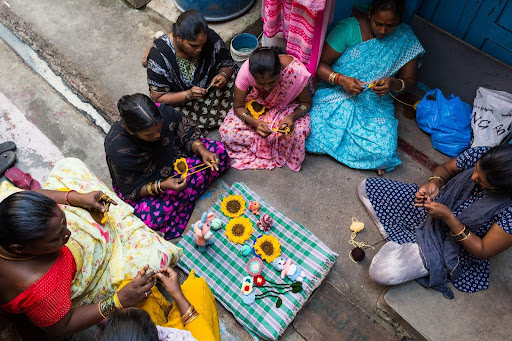
In waste-picking communities, livelihood decisions are rarely linear. Work choices are shaped by a constant balancing of informal enterprise, wage-based work, caregiving responsibilities, debt cycles, migration, and seasonal pressures. Entrepreneurship, in this context, is often intermittent and adaptive rather than continuous.
Early in the program, several women who had been identified as nano-entrepreneurs paused or discontinued their businesses to take up housekeeping or waste-picking work that offered immediate daily wages. From a single-organisation lens, this could have been seen as “drop-out.”
Within the collective, however, partners have the opportunity to align on a shared understanding: income stability mattered as much as business continuity. This reframing will allow the program to stay engaged with these women, instead of exiting them prematurely.
Collective impact created space to recognise real livelihoods, not idealised ones.
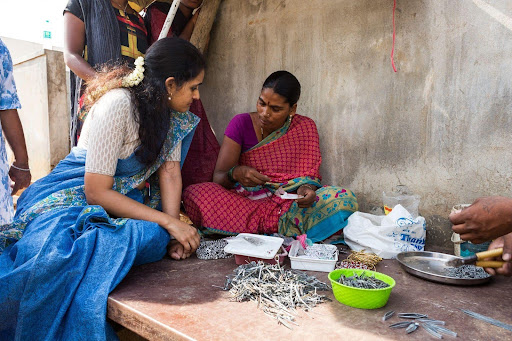
By functioning in a collective rather than as parallel programs, Udhyam Vyapaar in Saamuhika Shakti was able to:
For the community, this meant engaging with a coherent ecosystem of support, rather than navigating fragmented interventions from multiple organisations.
Collective impact is rarely quick or linear. It is most often applied in contexts of deep complexity, where change unfolds over time and requires sustained collaboration, trust-building, and alignment across organisations. It requires time, humility, negotiation, and continuous alignment. It asks organisations to slow down, listen deeply, and give up sole ownership of success.
No single organisation can respond to the full complexity of life in waste-picking communities. Different families face different constraints, related to income, health, education, safety, or social identity and meaningful change requires these realities to be addressed together, not in isolation.
For Udhyam Vyapaar, the future we are working toward in Saamuhika Shakti is one where multiple organisations engage with different parts of the same community, and often the same family, in a coordinated way. While one organisation may work closely with women on livelihoods or entrepreneurship like we do, another may support access to education, health, social security, or safety. Over time, this collective approach reduces fragmentation, allowing families to experience support as interconnected rather than piecemeal.
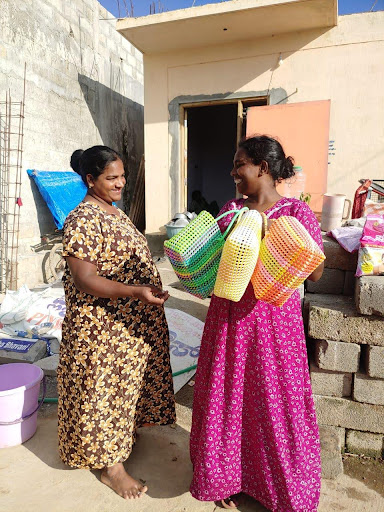
By keeping women at the centre, we recognise their central role within households as earners, caregivers, and decision-makers. When women gain more stable and dignified livelihood pathways, the effects extend beyond individual income to influence children’s schooling, household resilience, and the ability to plan for the future.
Being a part of Saamuhika Shakti’s experience reinforces a powerful lesson:
When organisations align around people and not programs, solutions become more grounded, more humane, and more sustainable.
As the collective continues to evolve, its strength lies not just in shared outcomes, but in the shared intent to learn continuously, adapt, and build systems that reflect the lived realities of the communities they serve.
By Hima Nandan, Partnerships & Marketing; Shruti Anand, Specialist - Marketing and Communication, Udhyam Vyapaar, Udhyam Learning Foundation
Complex social challenges rarely exist in isolation. They are shaped by overlapping systems, economic, social, cultural, and institutional, and no single organisation can address them all alone. This understanding lies at the heart of collective impact, a model that brings together multiple organisations around a shared vision, aligned strategies, and coordinated action. Saamuhika Shakti was built on this belief.
Saamuhika Shakti, initiated and funded by the H&M Foundation, is a structured collective impact initiative in Bengaluru that brings together organisations with deep, complementary expertise to address the interconnected challenges faced by informal waste pickers and their families. Working across livelihoods, entrepreneurship, education, health, social protection, and community systems, the collaboration focuses on bridging systemic gaps that perpetuate vulnerability. By combining economic interventions with efforts to address social, institutional, and gender-based barriers, including access to entitlements, safety, dignity, and changing societal perceptions, Saamuhika Shakti takes a holistic approach to enabling waste-picking communities, to build more secure, dignified, and sustainable futures.
In waste-picking communities, livelihood decisions are rarely linear. Work choices are shaped by a constant balancing of informal enterprise, wage-based work, caregiving responsibilities, debt cycles, migration, and seasonal pressures. Entrepreneurship, in this context, is often intermittent and adaptive rather than continuous.
Early in the program, several women who had been identified as nano-entrepreneurs paused or discontinued their businesses to take up housekeeping or waste-picking work that offered immediate daily wages. From a single-organisation lens, this could have been seen as “drop-out.”
Within the collective, however, partners have the opportunity to align on a shared understanding: income stability mattered as much as business continuity. This reframing will allow the program to stay engaged with these women, instead of exiting them prematurely.
Collective impact created space to recognise real livelihoods, not idealised ones.
By functioning in a collective rather than as parallel programs, Udhyam Vyapaar in Saamuhika Shakti was able to:
For the community, this meant engaging with a coherent ecosystem of support, rather than navigating fragmented interventions from multiple organisations.
Collective impact is rarely quick or linear. It is most often applied in contexts of deep complexity, where change unfolds over time and requires sustained collaboration, trust-building, and alignment across organisations. It requires time, humility, negotiation, and continuous alignment. It asks organisations to slow down, listen deeply, and give up sole ownership of success.
No single organisation can respond to the full complexity of life in waste-picking communities. Different families face different constraints, related to income, health, education, safety, or social identity and meaningful change requires these realities to be addressed together, not in isolation.
For Udhyam Vyapaar, the future we are working toward in Saamuhika Shakti is one where multiple organisations engage with different parts of the same community, and often the same family, in a coordinated way. While one organisation may work closely with women on livelihoods or entrepreneurship like we do, another may support access to education, health, social security, or safety. Over time, this collective approach reduces fragmentation, allowing families to experience support as interconnected rather than piecemeal.
By keeping women at the centre, we recognise their central role within households as earners, caregivers, and decision-makers. When women gain more stable and dignified livelihood pathways, the effects extend beyond individual income to influence children’s schooling, household resilience, and the ability to plan for the future.
Being a part of Saamuhika Shakti’s experience reinforces a powerful lesson:
When organisations align around people and not programs, solutions become more grounded, more humane, and more sustainable.
As the collective continues to evolve, its strength lies not just in shared outcomes, but in the shared intent to learn continuously, adapt, and build systems that reflect the lived realities of the communities they serve.


