
By Sukanya Dutta Gupta, Program Manager, Social Alpha
Circular economy innovation presents a powerful opportunity not only to redesign how materials and resources flow through our economy, but also to create more inclusive and resilient livelihood systems. As the transition moves away from the traditional linear ‘take-make-dispose’ model toward one that prioritises reuse, repair, recycling, and regeneration, it opens up new forms of work and value creation, particularly for communities already engaged in material recovery, such as waste pickers. However, this inclusion is not automatic; it must be intentionally designed into emerging systems. By extending product lifecycles, minimising waste, and continuously recovering value, the approach aims to decouple growth from resource depletion while enabling more dignified and stable livelihood pathways. At its core, this transition is inherently systemic, requiring alignment across behaviours, infrastructure, markets, and stakeholders.
Yet, complexities and challenges emerge. Circular economy focused innovation rarely fails because of a lack of intent or execution. It fails because promising solutions are tested in isolation, while the real world operates as an interconnected system of behaviour, infrastructure, markets, and people. These innovations seek to redesign how materials and resources flow through the economy - keeping products and materials in use for longer, reducing waste, and creating systems where value is continuously recovered rather than discarded.
For most early-stage deep-tech startups, pilots validate possibilities. Scale, however, demands proof – proof that a solution can survive operational complexity, commercial scrutiny, and ecosystem constraints.
The Innovations for a Circular Economy programme is built jointly by Social Alpha and H&M Foundation as part of Saamuhika Shakti to address this gap. By supporting innovators working on circular economy solutions in India, the programme focuses on moving startups beyond proof of concept towards proof of adoption, while also creating alternate livelihood opportunities for individuals from the waste picker community. It presents a new approach that links innovation with inclusion, enabling more stable and dignified livelihood pathways for communities engaged in waste recovery.
The programme supports a diverse set of technologies which enable circularity across a material’s lifecycle - from production and consumption to recovery and reuse. The cohort includes innovations that convert agricultural and hard-to-recycle waste streams into sustainable alternatives for industry, including plant-based materials and biodegradable product substitutes. It also supports technologies that strengthen waste collection, segregation, and traceability systems through digital platforms, AI-enabled sorting, and incentive-based models, alongside advanced recycling and resource recovery solutions. Despite efforts and intent, translating these innovations into scalable solutions is rarely straightforward, as startups must navigate fragmented waste systems, behavioural barriers, infrastructure gaps, and uncertain market linkages.
At its core, the programme recognises that scaling circular innovation is not just about supporting ideas, but about systematically de-risking the path to scale. This can be done in several ways:
One of the most common reasons pilots stall is that technologies work in controlled environments but falter under real operating conditions. In informal waste collection systems, for example, even small inaccuracies can cascade into mistrust, payment disputes, and inefficiencies.
Bintix confronts one of the most persistent barriers in the circular economy: segregation of waste. Households seldom segregate waste consistently, and even when they do – they are not bound by law or incentivised to continue routine segregation.
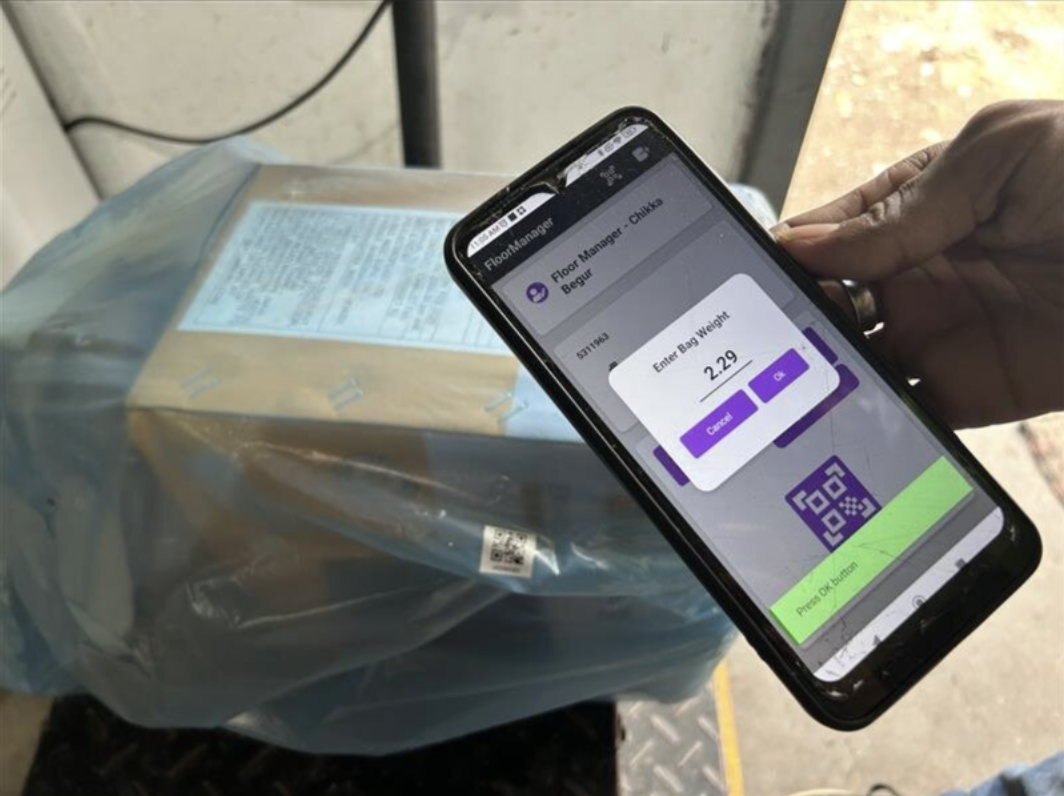
To incentivise proper waste segregation and promote consumer responsibility, Bintix implements an innovative payment model, where during household waste collection, bags with segregated waste are weighed, and customers receive a credit of ₹5 per kilogram in their digital wallet.
This is a step ahead of conventional systems where waste streams are often mixed and households receive no benefits to ensure proper segregation. By directly paying households for responsible behaviour, Bintix transforms segregation from a moral obligation into an economic incentive. However, manual weighing comes with its challenges of data inaccuracy and skewed readings.
Through the programme’s support, Bintix developed and deployed an automated weighing machine capable of accurately measuring waste collected from households. This shift does more than improve efficiency; it removes a barrier of trust by ensuring that data, payments, and reporting are grounded in verifiable measurements. Building on this foundation, Bintix also develops AI/ML-based software to identify and sort waste streams, strengthening traceability and enabling more reliable decision-making across the value chain.
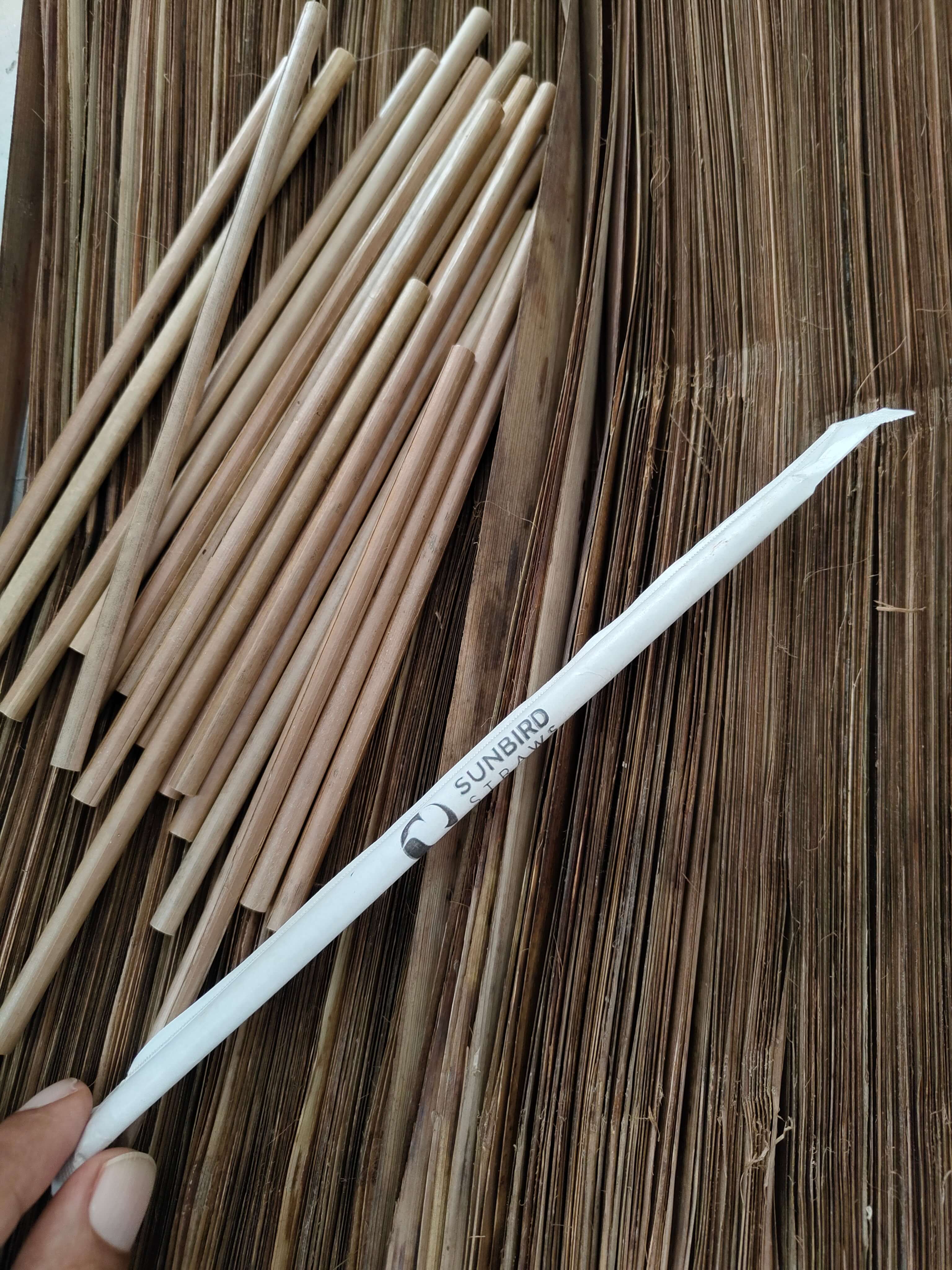
Sunbird Straws faces a classic challenge around scaling up. While its biodegradable straws made from dried coconut leaves demonstrate strong sustainability credentials, production capacity remains a bottleneck. Limited capacity machinery constrains consistency and throughput, making it difficult to meet demand and fulfil orders. The support under the programme enables Sunbird to develop an upgraded prototype of its straw-making machine, marking a pivotal step in transitioning from constrained manufacturing to scale readiness. This technological leap moves Sunbird closer to meeting the performance and volume expectations of large hospitality clients.
Even robust technologies fail if they require ecosystems to radically change how they operate. Adoption accelerates when solutions enhance existing workflows rather than disrupt them.
KOSHA’s experience illustrates this clearly. Most textile waste streams contain mixed fibres (cotton, polyester, blends) that are visually indistinguishable but require different recycling pathways. Textile Recovery Facilities (TRFs) often struggle with inefficient sorting, leading to contamination and loss of recyclable value. Introducing entirely new systems requires significant investment, can slow operations, and faces resistance around adoption by relevant stakeholders. Through the programme support, KOSHA deploys their flagship product FibreSENSE, India’s first AI-driven, Near Infrared Spectroscopy (NIR)-based semi-automatic fibre composition identification device, directly within existing TRFs.
The technology enables accurate optical sorting and real-time material identification, allowing operators to distinguish between visually similar fabrics without the need for technical expertise. By integrating into current processes, FibreSENSE improves recovery efficiency without adding operational friction.

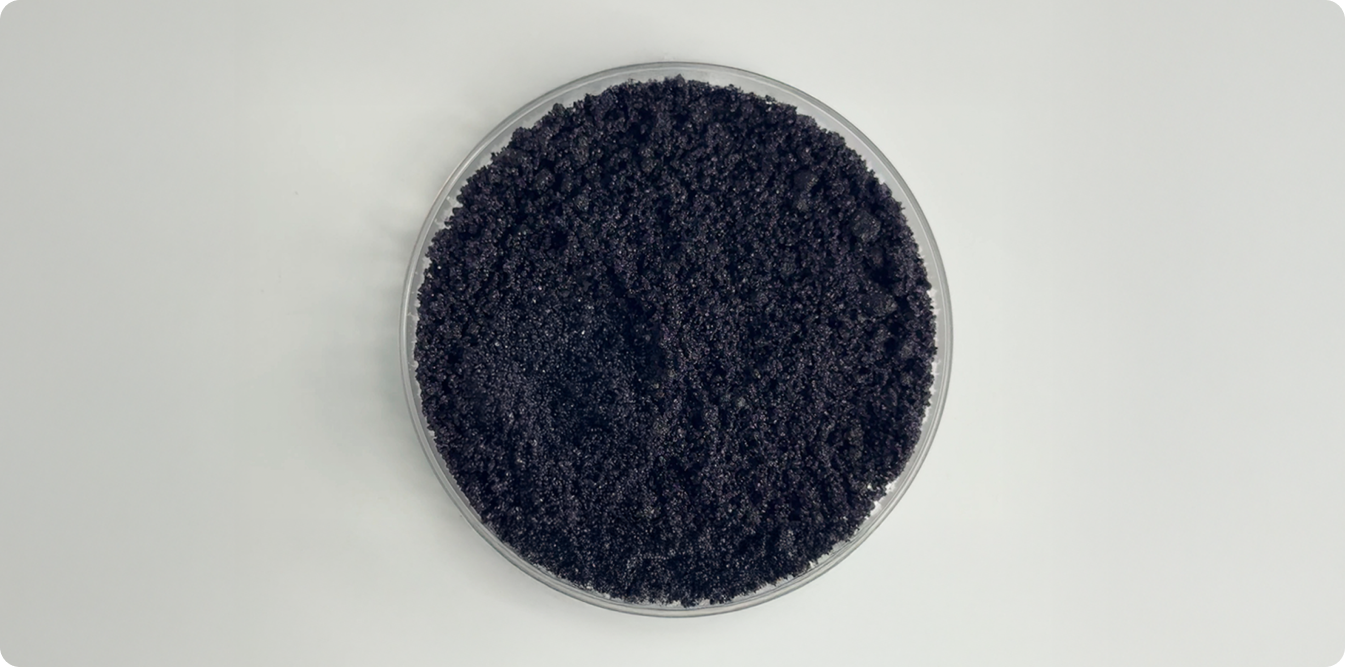
Microbeworks Scientific on the other hand, develops a drop-in microbial dye solution that integrates seamlessly into existing textile dyeing processes, enabling rapid adoption without changes to machinery or workflows. Microbial pigments are captured, dried, and converted into a powder that directly replaces conventional chemical dyes, eliminating toxic by-products from dyeing. Traditional dye manufacturing is highly energy-and water-intensive, contributing nearly 20% of global industrial wastewater. It also generates toxic effluents at high temperatures. In contrast, Microbeworks produces bio-based pigments at near-ambient temperatures, lowering energy use significantly while also eliminating toxic by-products and reducing wastewater toxicity.
Startups often encounter a critical transition point where sustainability alone is insufficient. Being a ‘green’ or ‘sustainable’ product is not enough; solutions must also meet stringent standards on performance, compliance, and cost - particularly when competing with conventional materials.
Go Do Good faced this challenge in the packaging industry. While bio-based alternatives to plastic coatings exist in theory, real-world adoption depends on meeting food safety regulations and functional requirements such as resistance to oils and water. With the programme’s support, Go Do Good has advanced its bio-based packaging solution by completing food safety and migration tests that confirm compliance with international standards. The team develops coated pouch and box prototypes capable of real-world food delivery use, unlocking new commercial applications.
This transition from concept to compliant product significantly reduces buyer risk, while strengthening the startup’s market positioning through its end-to-end design and production model.

For Banofi, the commercial hurdle lies in performance parity. Transforming banana crop waste into plant-based leather offers clear environmental benefits, but adoption depends on the material’s durability, consistency, and manufacturability at scale. Through the programme’s support, Banofi refines the material’s performance and improves operational efficiency. This strengthens its appeal as a viable leather alternative, aligning sustainability with everyday functionality.
For NovoEarth, it was crucial to balance sustainability with performance and ease of adoption. NovoPolymer, its patented material, offers a biodegradable alternative to conventional plastics, but adoption depends on compatibility with existing systems and credible validation of its environmental claims. Through the programme’s support, NovoEarth secured key biodegradability certifications confirming industrial compostability. Additionally, the startup was able to procure key equipment through which they produced their initial commercial samples. The program helped strengthen NovoPolymer's position as a viable plastic alternative, enabling adoption without compromising functionality.
Angirus was facing an operational challenge in scaling production while maintaining material consistency and process efficiency. WRICKS®, manufactured with its patented technology using recycled plastic and construction waste, offers a sustainable alternative to conventional bricks, but scaling depends on reliable manufacturing processes and consistent output quality.
Through the programme’s support, Angirus transitioned from a batch-based production system to a continuous manufacturing process, alongside shifting its facility from Udaipur to Bengaluru and upgrading machinery. This significantly increased production capacity, while improving process efficiency and enabling better control over material variability. This strengthens its ability to deliver a scalable, cost-effective alternative to conventional bricks — reducing dependence on primary raw materials while addressing construction waste and improving build efficiency.
.jpeg)
Some innovations cannot scale unless entire ecosystems move together. Fragmented supply chains, particularly in agricultural and waste-derived materials, introduce vulnerabilities that individual startups cannot resolve alone.
Canvaloop demonstrates how ecosystem risk can be addressed through localised partnerships. Previously reliant on imported raw materials, the company uses the programme’s support to build a local supply chain in central India by sourcing oilseed agricultural waste domestically. This requires setting up collection mechanisms, partnering with farmers and farmer producer organisations, and aligning production processes to local conditions. The result is a more resilient, cost-effective supply chain aligned with the Make in India mission.
Canvaloop’s materials deliver up to 99% water savings, 87% carbon savings, and 86% energy savings compared to conventional fibres!
The programme supports nine startups that deploy solutions across five Indian cities: Bengaluru, Surat, Pune, Kanpur, and Kolkata.
Collectively, these interventions divert over 2,000 tonnes of waste from landfills and avoid ~2,600 tonnes of CO₂e emissions, demonstrating that de-risked innovation can deliver meaningful environmental and climate outcomes.
Equally important is the impact on the livelihoods of individuals from marginalised communities. The programme has facilitated the creation of 36 formal jobs, largely for individuals from the waste picker community.
“The salary was never enough (in waste picking). There is a lot of work, but the pay is nothing. Earlier, whatever I earned, I used for living and eating. Now, if I get 5 rupees, I spend 3 and am able to save 2. Because of this work, I am able to give my daughter a little more. Earlier, I had to think before buying anything basic, but now I’m able to spend a little – better food, and some savings.” —Tumpa, employed at Banofi
Workers experience improved income stability, formal contracts, social benefits, and access to safe and hygienic working conditions, demonstrating that environmental outcomes are strongest when they are designed alongside inclusive livelihoods.
“Earlier, ID cards and coats were not provided. After coming here, I received both. When people hear about our work, our respect has increased, and I am proud of it.” — Mahalakshmi, employed at Sunbird Straws
Beyond these dimensions, there is also a need for an enabling ecosystem that supports technologies across multiple stages of maturity — from early validation to large-scale deployment. This includes stage-appropriate capital, blended finance mechanisms, and sustained ecosystem support that can absorb risk early while enabling innovators to reach commercial viability. Startups also need access to translational R&D, technology validation infrastructure, real-world testing environments, and early market linkages that de-risk both the technology and the business model.
Social Alpha addresses this challenge through a full-stack, lab-to-market support architecture. On the supply side, the model strengthens the innovation pipeline through translational R&D, product–market fit validation, and technology de-risking. On the demand side, it enables adoption through real-world testbeds, business model de-risking, market access pathways, and integration with public and institutional systems. Alongside this, Social Alpha deploys multi-stage, impact-first capital pools — comprising catalytic equity, grants, and debt instruments — complemented by infrastructure, market access support, and deep technology and business mentoring.
By intentionally de-risking each of these dimensions, the programme transforms pilots into proof, and proof into pathways for systemic change. The message is simple: meaningful scale comes to those who invest beyond innovation — into validation, risk reduction, and the ecosystem building that enables adoption.
🎥 Watch the short film capturing how circularity startups are systematically de-risking the path to scale: Pilots to Impact: Circularity Start-ups in Action
By Sukanya Dutta Gupta, Program Manager, Social Alpha
Circular economy innovation presents a powerful opportunity not only to redesign how materials and resources flow through our economy, but also to create more inclusive and resilient livelihood systems. As the transition moves away from the traditional linear ‘take-make-dispose’ model toward one that prioritises reuse, repair, recycling, and regeneration, it opens up new forms of work and value creation, particularly for communities already engaged in material recovery, such as waste pickers. However, this inclusion is not automatic; it must be intentionally designed into emerging systems. By extending product lifecycles, minimising waste, and continuously recovering value, the approach aims to decouple growth from resource depletion while enabling more dignified and stable livelihood pathways. At its core, this transition is inherently systemic, requiring alignment across behaviours, infrastructure, markets, and stakeholders.
Yet, complexities and challenges emerge. Circular economy focused innovation rarely fails because of a lack of intent or execution. It fails because promising solutions are tested in isolation, while the real world operates as an interconnected system of behaviour, infrastructure, markets, and people. These innovations seek to redesign how materials and resources flow through the economy - keeping products and materials in use for longer, reducing waste, and creating systems where value is continuously recovered rather than discarded.
For most early-stage deep-tech startups, pilots validate possibilities. Scale, however, demands proof – proof that a solution can survive operational complexity, commercial scrutiny, and ecosystem constraints.
The Innovations for a Circular Economy programme is built jointly by Social Alpha and H&M Foundation as part of Saamuhika Shakti to address this gap. By supporting innovators working on circular economy solutions in India, the programme focuses on moving startups beyond proof of concept towards proof of adoption, while also creating alternate livelihood opportunities for individuals from the waste picker community. It presents a new approach that links innovation with inclusion, enabling more stable and dignified livelihood pathways for communities engaged in waste recovery.
The programme supports a diverse set of technologies which enable circularity across a material’s lifecycle - from production and consumption to recovery and reuse. The cohort includes innovations that convert agricultural and hard-to-recycle waste streams into sustainable alternatives for industry, including plant-based materials and biodegradable product substitutes. It also supports technologies that strengthen waste collection, segregation, and traceability systems through digital platforms, AI-enabled sorting, and incentive-based models, alongside advanced recycling and resource recovery solutions. Despite efforts and intent, translating these innovations into scalable solutions is rarely straightforward, as startups must navigate fragmented waste systems, behavioural barriers, infrastructure gaps, and uncertain market linkages.
At its core, the programme recognises that scaling circular innovation is not just about supporting ideas, but about systematically de-risking the path to scale. This can be done in several ways:
One of the most common reasons pilots stall is that technologies work in controlled environments but falter under real operating conditions. In informal waste collection systems, for example, even small inaccuracies can cascade into mistrust, payment disputes, and inefficiencies.
Bintix confronts one of the most persistent barriers in the circular economy: segregation of waste. Households seldom segregate waste consistently, and even when they do – they are not bound by law or incentivised to continue routine segregation.
To incentivise proper waste segregation and promote consumer responsibility, Bintix implements an innovative payment model, where during household waste collection, bags with segregated waste are weighed, and customers receive a credit of ₹5 per kilogram in their digital wallet.
This is a step ahead of conventional systems where waste streams are often mixed and households receive no benefits to ensure proper segregation. By directly paying households for responsible behaviour, Bintix transforms segregation from a moral obligation into an economic incentive. However, manual weighing comes with its challenges of data inaccuracy and skewed readings.
Through the programme’s support, Bintix developed and deployed an automated weighing machine capable of accurately measuring waste collected from households. This shift does more than improve efficiency; it removes a barrier of trust by ensuring that data, payments, and reporting are grounded in verifiable measurements. Building on this foundation, Bintix also develops AI/ML-based software to identify and sort waste streams, strengthening traceability and enabling more reliable decision-making across the value chain.
Sunbird Straws faces a classic challenge around scaling up. While its biodegradable straws made from dried coconut leaves demonstrate strong sustainability credentials, production capacity remains a bottleneck. Limited capacity machinery constrains consistency and throughput, making it difficult to meet demand and fulfil orders. The support under the programme enables Sunbird to develop an upgraded prototype of its straw-making machine, marking a pivotal step in transitioning from constrained manufacturing to scale readiness. This technological leap moves Sunbird closer to meeting the performance and volume expectations of large hospitality clients.
Even robust technologies fail if they require ecosystems to radically change how they operate. Adoption accelerates when solutions enhance existing workflows rather than disrupt them.
KOSHA’s experience illustrates this clearly. Most textile waste streams contain mixed fibres (cotton, polyester, blends) that are visually indistinguishable but require different recycling pathways. Textile Recovery Facilities (TRFs) often struggle with inefficient sorting, leading to contamination and loss of recyclable value. Introducing entirely new systems requires significant investment, can slow operations, and faces resistance around adoption by relevant stakeholders. Through the programme support, KOSHA deploys their flagship product FibreSENSE, India’s first AI-driven, Near Infrared Spectroscopy (NIR)-based semi-automatic fibre composition identification device, directly within existing TRFs.
The technology enables accurate optical sorting and real-time material identification, allowing operators to distinguish between visually similar fabrics without the need for technical expertise. By integrating into current processes, FibreSENSE improves recovery efficiency without adding operational friction.
Microbeworks Scientific on the other hand, develops a drop-in microbial dye solution that integrates seamlessly into existing textile dyeing processes, enabling rapid adoption without changes to machinery or workflows. Microbial pigments are captured, dried, and converted into a powder that directly replaces conventional chemical dyes, eliminating toxic by-products from dyeing. Traditional dye manufacturing is highly energy-and water-intensive, contributing nearly 20% of global industrial wastewater. It also generates toxic effluents at high temperatures. In contrast, Microbeworks produces bio-based pigments at near-ambient temperatures, lowering energy use significantly while also eliminating toxic by-products and reducing wastewater toxicity.
Startups often encounter a critical transition point where sustainability alone is insufficient. Being a ‘green’ or ‘sustainable’ product is not enough; solutions must also meet stringent standards on performance, compliance, and cost - particularly when competing with conventional materials.
Go Do Good faced this challenge in the packaging industry. While bio-based alternatives to plastic coatings exist in theory, real-world adoption depends on meeting food safety regulations and functional requirements such as resistance to oils and water. With the programme’s support, Go Do Good has advanced its bio-based packaging solution by completing food safety and migration tests that confirm compliance with international standards. The team develops coated pouch and box prototypes capable of real-world food delivery use, unlocking new commercial applications.
This transition from concept to compliant product significantly reduces buyer risk, while strengthening the startup’s market positioning through its end-to-end design and production model.
For Banofi, the commercial hurdle lies in performance parity. Transforming banana crop waste into plant-based leather offers clear environmental benefits, but adoption depends on the material’s durability, consistency, and manufacturability at scale. Through the programme’s support, Banofi refines the material’s performance and improves operational efficiency. This strengthens its appeal as a viable leather alternative, aligning sustainability with everyday functionality.
For NovoEarth, it was crucial to balance sustainability with performance and ease of adoption. NovoPolymer, its patented material, offers a biodegradable alternative to conventional plastics, but adoption depends on compatibility with existing systems and credible validation of its environmental claims. Through the programme’s support, NovoEarth secured key biodegradability certifications confirming industrial compostability. Additionally, the startup was able to procure key equipment through which they produced their initial commercial samples. The program helped strengthen NovoPolymer's position as a viable plastic alternative, enabling adoption without compromising functionality.
Angirus was facing an operational challenge in scaling production while maintaining material consistency and process efficiency. WRICKS®, manufactured with its patented technology using recycled plastic and construction waste, offers a sustainable alternative to conventional bricks, but scaling depends on reliable manufacturing processes and consistent output quality.
Through the programme’s support, Angirus transitioned from a batch-based production system to a continuous manufacturing process, alongside shifting its facility from Udaipur to Bengaluru and upgrading machinery. This significantly increased production capacity, while improving process efficiency and enabling better control over material variability. This strengthens its ability to deliver a scalable, cost-effective alternative to conventional bricks — reducing dependence on primary raw materials while addressing construction waste and improving build efficiency.
Some innovations cannot scale unless entire ecosystems move together. Fragmented supply chains, particularly in agricultural and waste-derived materials, introduce vulnerabilities that individual startups cannot resolve alone.
Canvaloop demonstrates how ecosystem risk can be addressed through localised partnerships. Previously reliant on imported raw materials, the company uses the programme’s support to build a local supply chain in central India by sourcing oilseed agricultural waste domestically. This requires setting up collection mechanisms, partnering with farmers and farmer producer organisations, and aligning production processes to local conditions. The result is a more resilient, cost-effective supply chain aligned with the Make in India mission.
Canvaloop’s materials deliver up to 99% water savings, 87% carbon savings, and 86% energy savings compared to conventional fibres!
The programme supports nine startups that deploy solutions across five Indian cities: Bengaluru, Surat, Pune, Kanpur, and Kolkata.
Collectively, these interventions divert over 2,000 tonnes of waste from landfills and avoid ~2,600 tonnes of CO₂e emissions, demonstrating that de-risked innovation can deliver meaningful environmental and climate outcomes.
Equally important is the impact on the livelihoods of individuals from marginalised communities. The programme has facilitated the creation of 36 formal jobs, largely for individuals from the waste picker community.
“The salary was never enough (in waste picking). There is a lot of work, but the pay is nothing. Earlier, whatever I earned, I used for living and eating. Now, if I get 5 rupees, I spend 3 and am able to save 2. Because of this work, I am able to give my daughter a little more. Earlier, I had to think before buying anything basic, but now I’m able to spend a little – better food, and some savings.” —Tumpa, employed at Banofi
Workers experience improved income stability, formal contracts, social benefits, and access to safe and hygienic working conditions, demonstrating that environmental outcomes are strongest when they are designed alongside inclusive livelihoods.
“Earlier, ID cards and coats were not provided. After coming here, I received both. When people hear about our work, our respect has increased, and I am proud of it.” — Mahalakshmi, employed at Sunbird Straws
Beyond these dimensions, there is also a need for an enabling ecosystem that supports technologies across multiple stages of maturity — from early validation to large-scale deployment. This includes stage-appropriate capital, blended finance mechanisms, and sustained ecosystem support that can absorb risk early while enabling innovators to reach commercial viability. Startups also need access to translational R&D, technology validation infrastructure, real-world testing environments, and early market linkages that de-risk both the technology and the business model.
Social Alpha addresses this challenge through a full-stack, lab-to-market support architecture. On the supply side, the model strengthens the innovation pipeline through translational R&D, product–market fit validation, and technology de-risking. On the demand side, it enables adoption through real-world testbeds, business model de-risking, market access pathways, and integration with public and institutional systems. Alongside this, Social Alpha deploys multi-stage, impact-first capital pools — comprising catalytic equity, grants, and debt instruments — complemented by infrastructure, market access support, and deep technology and business mentoring.
By intentionally de-risking each of these dimensions, the programme transforms pilots into proof, and proof into pathways for systemic change. The message is simple: meaningful scale comes to those who invest beyond innovation — into validation, risk reduction, and the ecosystem building that enables adoption.
🎥 Watch the short film capturing how circularity startups are systematically de-risking the path to scale: Pilots to Impact: Circularity Start-ups in Action


