
By Ashna Abi, Senior Associate, and Rahul Chatterjee, Manager, Intellecap (Circular Apparel Innovation Factory)
What does a waste picker need to become a business owner or pursue an alternate livelihood? It’s not for want of ambition. The challenge has always been lack of access to skilling, to market, and to capital available on affordable, and fair terms."
For far too long, waste pickers have been viewed primarily as collectors and sorters of discarded materials, with little recognition of their potential as entrepreneurs and business owners. Since 2023, the Circular Apparel Innovation Factory (CAIF), an initiative of Intellecap, has been driving this shift within Bengaluru's textile waste ecosystem as part of Saamuhika Shakti.
At the heart of this model is a simple belief: when people have the skills, market connections and resources to pursue new opportunities, they can move beyond subsistence livelihoods and build businesses of their own. Recognising waste pickers as entrepreneurs and skilled workers, rather than just collectors, opens up new possibilities for dignity, opportunity and economic choice. It can also set multiplier effects in motion as we have seen in Bangalore.
Two barriers have traditionally limited mobility:
CAIF's Circular Textile Waste Management (CTWM) model addresses these barriers by building specialised capabilities among waste pickers, enabling them to move into higher-value segments of waste management and other sectors. It also creates opportunities for them to become micro-entrepreneurs. By combining skills development with market access and financial support, the model helps waste pickers translate their capabilities into viable livelihood opportunities.
As an ecosystem enabler, CAIF, along with implementation partners Hasiru Dala and Sambhav Foundation, is helping create the conditions for this shift. The ambition is not only to enable individuals to build better livelihoods, but also to create opportunities for those around them.
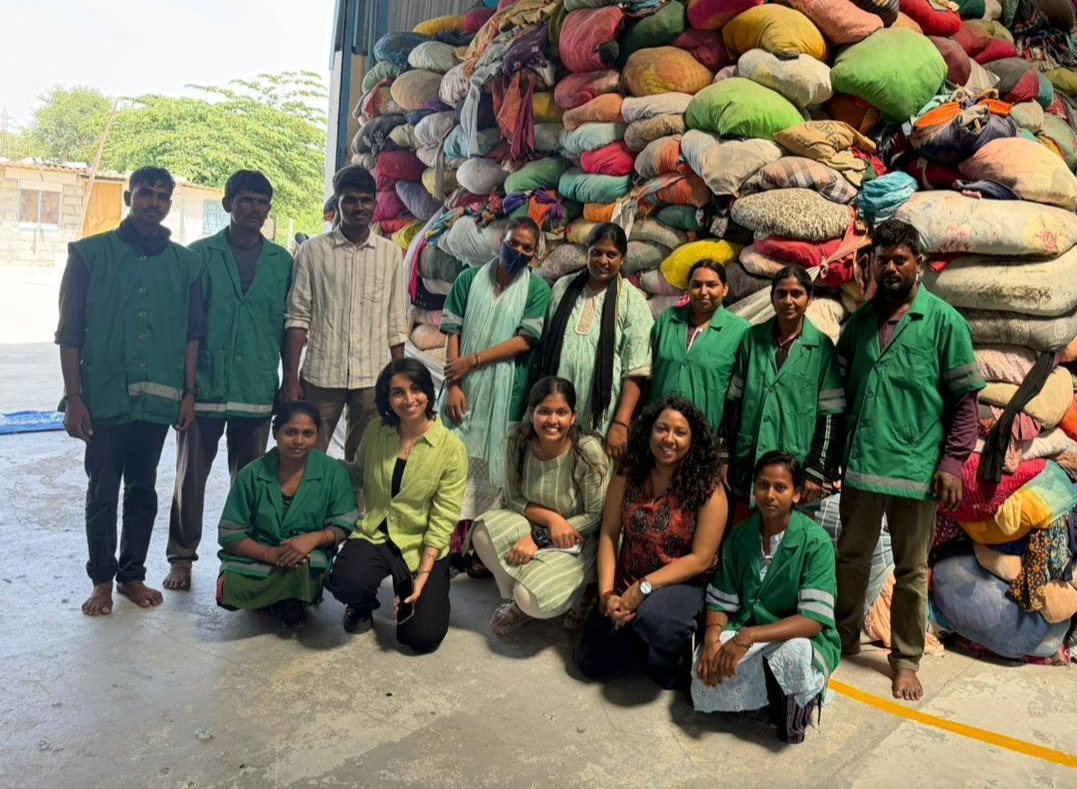
Operating through a Hub-and-Spoke model, the Textile Recovery Facility (TRF) aggregates textile waste from 16 Dry Waste Collection Centres (DWCCs), residential communities and institutional partners across Bengaluru. Within this ecosystem, waste pickers receive training in textile grading, quality assessment, inventory management and value-addition processes that increase the value of recovered materials.
Beyond basic sorting, workers at TRFs and DWCCs, where primary sorting takes place before materials are sent to the TRF, can now identify and grade garments suitable for thrift and resale. They can also undertake minor repairs, engage directly with buyers, use material composition analysis technology and manufacture products such as industrial wipes and upcycled bags.
These capabilities give workers a deeper understanding of market demand. Since joining the TRF, sorters have reported an average 15% increase in income, alongside better working conditions, flexible working hours and improved workplace safety.
The impact extends well beyond the TRF and DWCCs. Through the Green Skilling Programme, implemented by CAIF and Hasiru Dala, more than 600 waste pickers, including free-roaming waste workers across Bengaluru, have been trained to recognise textile waste as a valuable economic resource. Some have leveraged these skills to secure opportunities within the TRF ecosystem, while others have gone on to establish ventures of their own.
More importantly, these interventions are changing how workers perceive themselves. As they gain specialised expertise and market awareness, they are better positioned to make informed decisions about their livelihoods rather than remain constrained by circumstances.
.jpg)
Not everyone wants to remain in the waste sector. For some, the goal is to pursue an entirely different livelihood, which calls for a different set of skills and opportunities.
Some members from waste picker families aspire to pursue alternate livelihoods. For them, skills become valuable only when they translate into real economic opportunities. Recognising this need, CAIF partnered with Sambhav Foundation to develop a Skill-as-a-Service model that bridges the gap between skilling and market demand. The model gives women the choice to pursue an alternate path from learning a trade to earning an income.
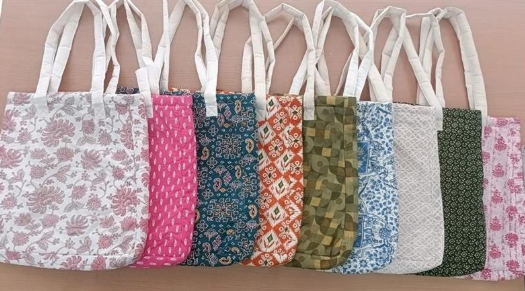
Through this initiative, women from waste picker households received training in the production of upcycled textile products at Sambhav Foundation's Livelihood Resource Centre (LRC). To date, CAIF has partnered with four upcyclers — Twirl Store, Jaggery Bags, Bunko Junko and Studio Katran — to train a cohort of women artisans in making upcycled products and connect them to markets through work orders.
More than 50 women from waste picker families have been trained through this initiative and have received additional income through work orders from the upcyclers. The model has also created value for the businesses involved, enabling them to expand production while supporting the livelihoods of women artisans.
Sujata Chatterjee, Founder of Twirl Store, who has been associated with the model since its inception, has witnessed this progress first-hand:
“I have been associated with the Skill-as-a-Service model since its inception. I have given multiple work orders to the trained women from waste picker families. I can see that the product quality has progressively improved over time and aligned with market requirements. I like engaging with this model as it helps me outsource production without managing it and in turn grow my business.”
Her experience highlights how sustained engagement with market partners can help women artisans strengthen their skills, meet quality expectations and access work opportunities. Most importantly, these women now have more livelihood choices, reducing their dependence on waste work as their sole source of income.
.jpg)
Training and work orders can bring women to the threshold of entrepreneurship. Taking the next step, however, requires access to capital — something they have traditionally struggled to secure.
For many women from waste picker households who have trained in alternate livelihood skills, affordable credit remains out of reach. This limits their ability to invest in tools, equipment or small businesses. To address this challenge, CAIF partnered with Rang De and Sambhav Foundation to design financing solutions tailored to aspiring women entrepreneurs.
Through a pilot initiative, ten women from waste picker families, already trained in tailoring and beauty services by Sambhav Foundation, gained access to loans ranging from Rs 25,000 to Rs 50,000, at affordable interest rates of 8–8.5%. This compares with rates of 20–30% or more typically charged by banks and non-banking financial companies (NBFCs) for collateral-free loans. The financing enabled the women to purchase essential equipment and supplies to start their ventures, including sewing machines and beauty kits.
The results were significant. All ten women successfully launched home-based enterprises, and their monthly revenues more than doubled within seven months. They have also been repaying their equated monthly instalments (EMIs) regularly, demonstrating credit discipline. Their experience shows how affordable finance, when combined with skilling and market access, can turn entrepreneurship into a reality.
Indumathi's transition from waste picker to textile waste entrepreneur through the programme illustrates what can happen when skills, opportunity and support systems converge. Today, she not only runs her own enterprise but also mentors fellow waste workers, demonstrating how individual enterprise can create possibilities for others, that entrepreneurship and leadership are within reach.
Her journey has also given her a broader vision for the sector. Reflecting on her experience at Bharat Tex, where she had the opportunity to speak with the Prime Minister, Indumathi shared:
“At Bharat Tex, I got three minutes to speak to the Prime Minister, and I spoke for everyone who works with me. I showed him the whole journey of post-consumer textile waste: waste pickers collect clothes from homes, the clothes are segregated at the Dry Waste Collection Centre, and then they come to my Textile Recovery Facility. These are clothes that would otherwise go to the landfill. He said it was something new, because people usually talk about pre-consumer waste.
I've seen this work change the lives of the people around me. I want every waste picker to get an opportunity like the one I received. For that, I want many more Textile Recovery Facilities and Recycling facilities to be set up close by, so the jobs stay local.”
Indumathi’s aspiration goes beyond running a viable business. It is also about creating opportunities for other waste pickers and ensuring that the economic benefits of textile recovery are also accessible to the local communities.
Her journey has inspired others to imagine similar possibilities. One such example is Anitha, a former free-roaming waste picker who participated in the Green Skilling Programme. Inspired by Indumathi and supported by Hasiru Dala and Soujanya Foundation, Anitha has started a mini-TRF of her own. Today, she employs women from her community, extending the benefits of entrepreneurship beyond her own household.
These stories signal an important shift. The impact is no longer confined to individual participants. As more women step into leadership and enterprise ownership, they create opportunities for others, strengthen community resilience and nurture a culture of aspiration, ownership and collective progress.
.jpg)
At its core, agency is about choice. When people have access to the skills, opportunities and resources they need, they can make choices about the work they do, the businesses they build and the futures they want to create.
Ultimately, the ambition is not simply to integrate waste pickers into Bengaluru's circular economy. It is to ensure they play an active role in building it and shaping its future on their own terms, with dignity, confidence and ownership. This model has demonstrated its potential and is ready to scale.
By Ashna Abi, Senior Associate, and Rahul Chatterjee, Manager, Intellecap (Circular Apparel Innovation Factory)
What does a waste picker need to become a business owner or pursue an alternate livelihood? It’s not for want of ambition. The challenge has always been lack of access to skilling, to market, and to capital available on affordable, and fair terms."
For far too long, waste pickers have been viewed primarily as collectors and sorters of discarded materials, with little recognition of their potential as entrepreneurs and business owners. Since 2023, the Circular Apparel Innovation Factory (CAIF), an initiative of Intellecap, has been driving this shift within Bengaluru's textile waste ecosystem as part of Saamuhika Shakti.
At the heart of this model is a simple belief: when people have the skills, market connections and resources to pursue new opportunities, they can move beyond subsistence livelihoods and build businesses of their own. Recognising waste pickers as entrepreneurs and skilled workers, rather than just collectors, opens up new possibilities for dignity, opportunity and economic choice. It can also set multiplier effects in motion as we have seen in Bangalore.
Two barriers have traditionally limited mobility:
CAIF's Circular Textile Waste Management (CTWM) model addresses these barriers by building specialised capabilities among waste pickers, enabling them to move into higher-value segments of waste management and other sectors. It also creates opportunities for them to become micro-entrepreneurs. By combining skills development with market access and financial support, the model helps waste pickers translate their capabilities into viable livelihood opportunities.
As an ecosystem enabler, CAIF, along with implementation partners Hasiru Dala and Sambhav Foundation, is helping create the conditions for this shift. The ambition is not only to enable individuals to build better livelihoods, but also to create opportunities for those around them.
Operating through a Hub-and-Spoke model, the Textile Recovery Facility (TRF) aggregates textile waste from 16 Dry Waste Collection Centres (DWCCs), residential communities and institutional partners across Bengaluru. Within this ecosystem, waste pickers receive training in textile grading, quality assessment, inventory management and value-addition processes that increase the value of recovered materials.
Beyond basic sorting, workers at TRFs and DWCCs, where primary sorting takes place before materials are sent to the TRF, can now identify and grade garments suitable for thrift and resale. They can also undertake minor repairs, engage directly with buyers, use material composition analysis technology and manufacture products such as industrial wipes and upcycled bags.
These capabilities give workers a deeper understanding of market demand. Since joining the TRF, sorters have reported an average 15% increase in income, alongside better working conditions, flexible working hours and improved workplace safety.
The impact extends well beyond the TRF and DWCCs. Through the Green Skilling Programme, implemented by CAIF and Hasiru Dala, more than 600 waste pickers, including free-roaming waste workers across Bengaluru, have been trained to recognise textile waste as a valuable economic resource. Some have leveraged these skills to secure opportunities within the TRF ecosystem, while others have gone on to establish ventures of their own.
More importantly, these interventions are changing how workers perceive themselves. As they gain specialised expertise and market awareness, they are better positioned to make informed decisions about their livelihoods rather than remain constrained by circumstances.
Not everyone wants to remain in the waste sector. For some, the goal is to pursue an entirely different livelihood, which calls for a different set of skills and opportunities.
Some members from waste picker families aspire to pursue alternate livelihoods. For them, skills become valuable only when they translate into real economic opportunities. Recognising this need, CAIF partnered with Sambhav Foundation to develop a Skill-as-a-Service model that bridges the gap between skilling and market demand. The model gives women the choice to pursue an alternate path from learning a trade to earning an income.
Through this initiative, women from waste picker households received training in the production of upcycled textile products at Sambhav Foundation's Livelihood Resource Centre (LRC). To date, CAIF has partnered with four upcyclers — Twirl Store, Jaggery Bags, Bunko Junko and Studio Katran — to train a cohort of women artisans in making upcycled products and connect them to markets through work orders.
More than 50 women from waste picker families have been trained through this initiative and have received additional income through work orders from the upcyclers. The model has also created value for the businesses involved, enabling them to expand production while supporting the livelihoods of women artisans.
Sujata Chatterjee, Founder of Twirl Store, who has been associated with the model since its inception, has witnessed this progress first-hand:
“I have been associated with the Skill-as-a-Service model since its inception. I have given multiple work orders to the trained women from waste picker families. I can see that the product quality has progressively improved over time and aligned with market requirements. I like engaging with this model as it helps me outsource production without managing it and in turn grow my business.”
Her experience highlights how sustained engagement with market partners can help women artisans strengthen their skills, meet quality expectations and access work opportunities. Most importantly, these women now have more livelihood choices, reducing their dependence on waste work as their sole source of income.
Training and work orders can bring women to the threshold of entrepreneurship. Taking the next step, however, requires access to capital — something they have traditionally struggled to secure.
For many women from waste picker households who have trained in alternate livelihood skills, affordable credit remains out of reach. This limits their ability to invest in tools, equipment or small businesses. To address this challenge, CAIF partnered with Rang De and Sambhav Foundation to design financing solutions tailored to aspiring women entrepreneurs.
Through a pilot initiative, ten women from waste picker families, already trained in tailoring and beauty services by Sambhav Foundation, gained access to loans ranging from Rs 25,000 to Rs 50,000, at affordable interest rates of 8–8.5%. This compares with rates of 20–30% or more typically charged by banks and non-banking financial companies (NBFCs) for collateral-free loans. The financing enabled the women to purchase essential equipment and supplies to start their ventures, including sewing machines and beauty kits.
The results were significant. All ten women successfully launched home-based enterprises, and their monthly revenues more than doubled within seven months. They have also been repaying their equated monthly instalments (EMIs) regularly, demonstrating credit discipline. Their experience shows how affordable finance, when combined with skilling and market access, can turn entrepreneurship into a reality.
Indumathi's transition from waste picker to textile waste entrepreneur through the programme illustrates what can happen when skills, opportunity and support systems converge. Today, she not only runs her own enterprise but also mentors fellow waste workers, demonstrating how individual enterprise can create possibilities for others, that entrepreneurship and leadership are within reach.
Her journey has also given her a broader vision for the sector. Reflecting on her experience at Bharat Tex, where she had the opportunity to speak with the Prime Minister, Indumathi shared:
“At Bharat Tex, I got three minutes to speak to the Prime Minister, and I spoke for everyone who works with me. I showed him the whole journey of post-consumer textile waste: waste pickers collect clothes from homes, the clothes are segregated at the Dry Waste Collection Centre, and then they come to my Textile Recovery Facility. These are clothes that would otherwise go to the landfill. He said it was something new, because people usually talk about pre-consumer waste.
I've seen this work change the lives of the people around me. I want every waste picker to get an opportunity like the one I received. For that, I want many more Textile Recovery Facilities and Recycling facilities to be set up close by, so the jobs stay local.”
Indumathi’s aspiration goes beyond running a viable business. It is also about creating opportunities for other waste pickers and ensuring that the economic benefits of textile recovery are also accessible to the local communities.
Her journey has inspired others to imagine similar possibilities. One such example is Anitha, a former free-roaming waste picker who participated in the Green Skilling Programme. Inspired by Indumathi and supported by Hasiru Dala and Soujanya Foundation, Anitha has started a mini-TRF of her own. Today, she employs women from her community, extending the benefits of entrepreneurship beyond her own household.
These stories signal an important shift. The impact is no longer confined to individual participants. As more women step into leadership and enterprise ownership, they create opportunities for others, strengthen community resilience and nurture a culture of aspiration, ownership and collective progress.
At its core, agency is about choice. When people have access to the skills, opportunities and resources they need, they can make choices about the work they do, the businesses they build and the futures they want to create.
Ultimately, the ambition is not simply to integrate waste pickers into Bengaluru's circular economy. It is to ensure they play an active role in building it and shaping its future on their own terms, with dignity, confidence and ownership. This model has demonstrated its potential and is ready to scale.


